
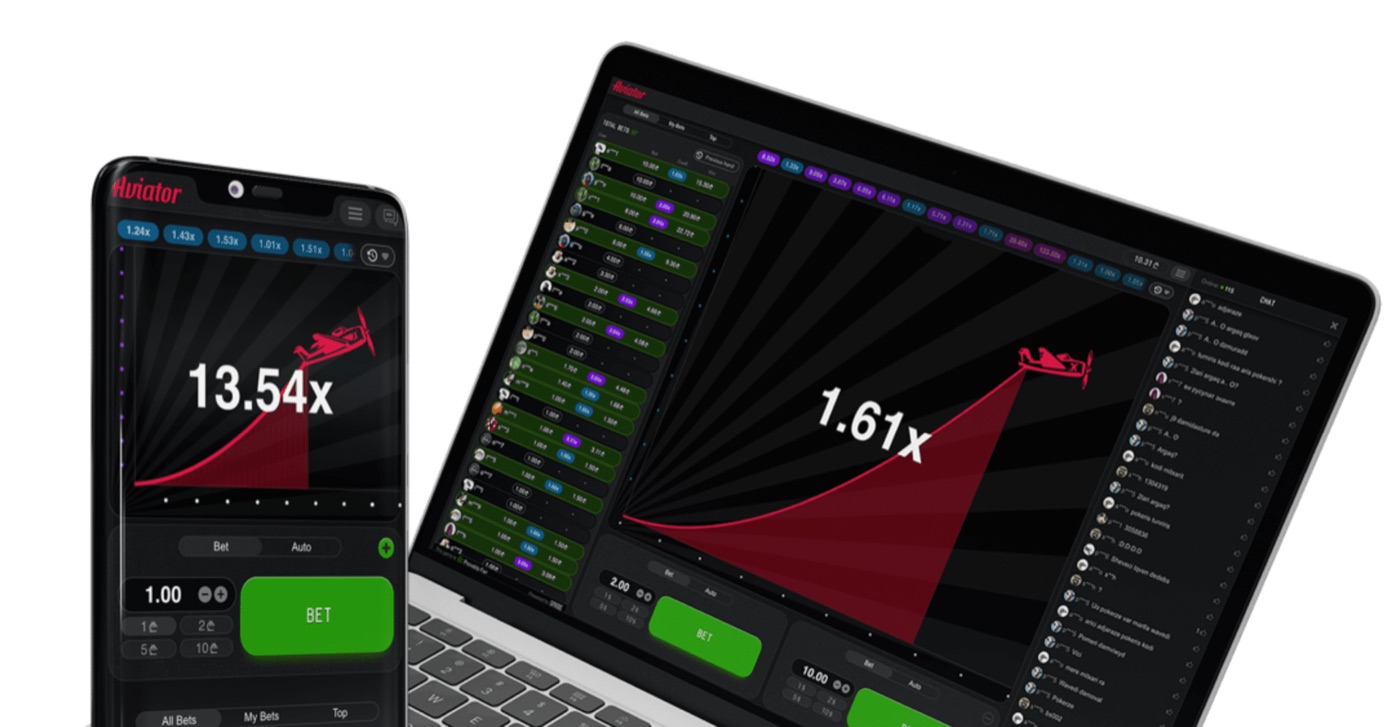
Aviator by Spribe produces one number per round: the multiplier where the plane crashes. Everything measurable in this crash game comes back to that number, how often certain values appear, and how much of the apparent pattern is just variance. This article looks only at what can be counted, and what cannot.
The facts below come from Spribe’s published game model: 97% RTP, a 3% house edge, and a crash probability of 0.97 divided by the target multiplier. Round history, sample size, the 0.97/m distribution and variance are the four topics, in that order.
What each round records
Each Aviator round lasts about 8 to 30 seconds and ends at one crash multiplier. At 60 to 90 rounds per hour, a two-hour session produces roughly 120 to 180 data points.
The game interface exposes several measurable elements per round:
- The final crash multiplier, shown in the round history strip at the top of the screen.
- Your stake and cash-out multiplier for each of the two bet panels, if used.
- Live bets from other players in the All Bets panel, including their cash-out points.
- Top wins on a daily, monthly and all-time basis.
- The provably fair hash data for each round, available in the verification tool.
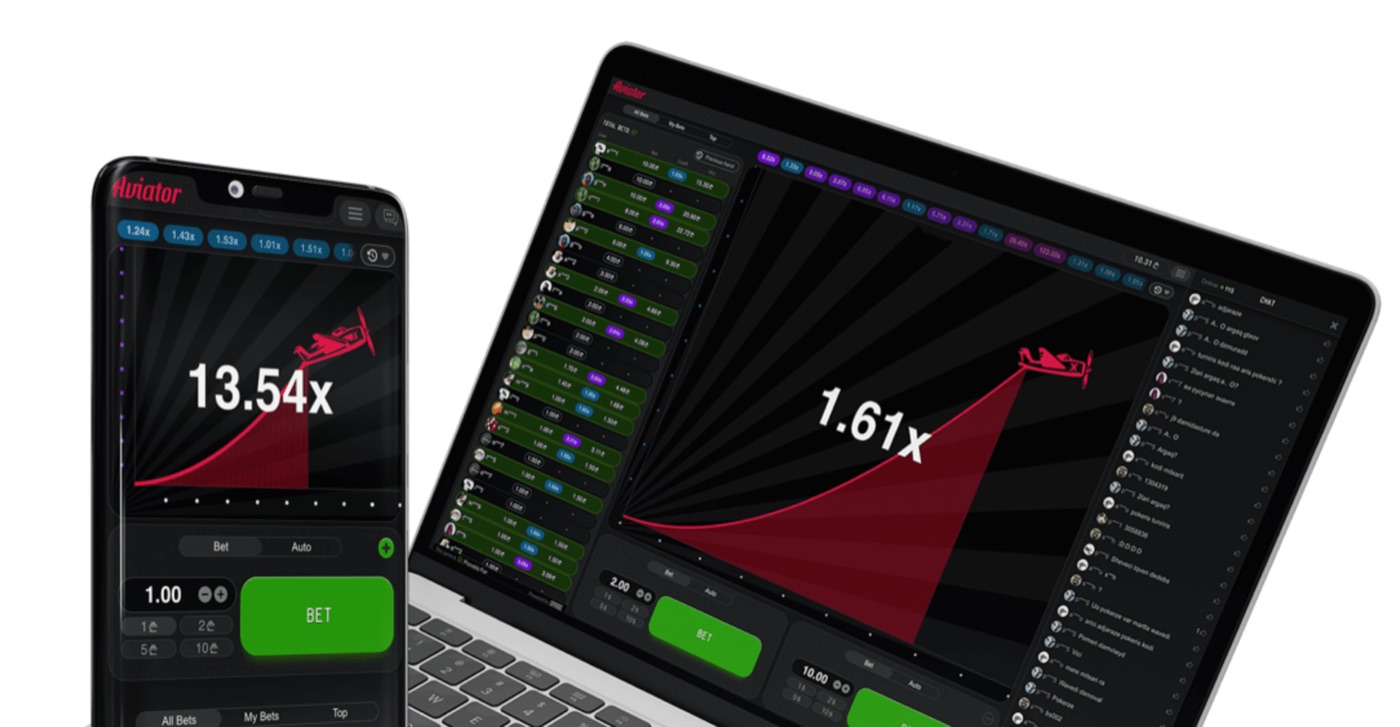
Aviator runs the same round data on phone and desktop; multipliers such as 13.54x and 1.61x sit at very different probability levels.
Two of those numbers illustrate the scale. A cash-out at 1.61x succeeds in about 60% of rounds. A crash point of 13.54x or higher occurs in roughly 7% of rounds. Both are ordinary outputs of the same formula, not signs of a hot or cold game.
Round history and its limits
The round history strip shows the most recent crash multipliers, colour-coded by size. The live bets panel shows what other players staked and where they exited during the current round.
What the history strip can legitimately tell you:
- How often low multipliers (under 2x) appeared in the recent sample.
- Whether the observed share of instant 1.00x crashes is near the expected 3%.
- How frequently high multipliers (10x and above) occurred in the window shown.
What it cannot tell you:
- Anything about the next round. Rounds are independent, so a run of low multipliers does not make a high one due.
- The best time to play. Guides confirm that “best time” theories do not change the odds.
- Patterns. “Graph analysis” and strategy chart PDFs do not alter the 3% house edge.
The history panel is a record, not a forecast. It is useful for verifying that the game behaves as the math says over time, and useless as a prediction tool.
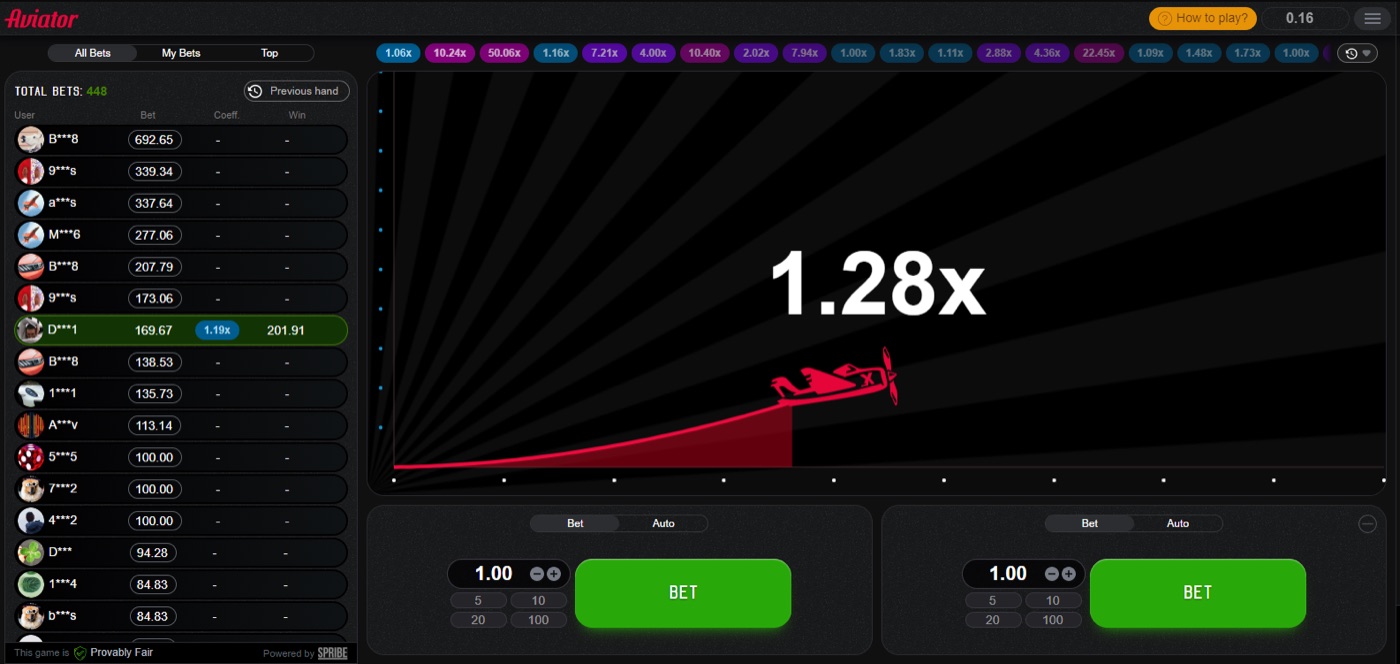
The rising curve can stop at any point; the crash point is fixed before take-off.
Sample size and streaks
Spribe’s math gives a 9.7% chance that any single round reaches 10x. Over 100 rounds, you expect about 9 or 10 such rounds, but random clustering makes the actual count vary widely.
Small samples distort everything. Consider these concrete cases:
- In 33 rounds, you expect about one instant 1.00x crash. Seeing three in a row feels like a rigged game; statistically it is unremarkable.
- A 1.5x cash-out target wins 64.7% of rounds. Losing five in a row has a probability of about 0.35 to the power of five, roughly 0.5%, so it will happen to regular players.
- A 50x multiplier has a 1.94% chance per round. In 200 rounds you expect about four, but zero and eight are both plausible outcomes.
Streaks are the main source of “rigged” complaints seen on Quora. The provably fair system, independent rounds, and the fixed 0.97/m curve answer those complaints. A cash-out that times out is a latency issue: the request must reach the server before the crash, and a slow device or connection can lose that race.
The 0.97/m distribution
The probability that a round reaches multiplier m is 0.97 divided by m. About 3% of rounds, roughly 1 in 33, crash instantly at 1.00x.
The full table of the published values:
| Target multiplier | Probability of reaching it |
|---|---|
| 1.2x | 80.8% |
| 1.5x | 64.7% |
| 2x | 48.5% |
| 3x | 32.3% |
| 5x | 19.4% |
| 10x | 9.7% |
| 20x | 4.85% |
| 50x | 1.94% |
| 100x | 0.97% |
Read the table as expected value, not as targets. At every cash-out point, the expected return is 97% of the stake: the win probability multiplied by the payout equals 0.97 each time. Cashing out at 1.2x wins often and loses everything on 1.00x crashes; holding for 100x wins rarely and pays 100 to 1. The edge is identical.
The maximum multiplier is not published by Spribe, and guides quote different figures. Win caps per round are set by each operator, so the practical ceiling depends on the operator.
Variance and the two-bet setup
Aviator offers two bet panels per round with separate cash-outs, plus Auto Cash-Out at a preset multiplier. Strategy changes variance, not the 3% edge.
The standard approaches from guides, stated as measurable choices:
- Auto cash-out at 1.5x to 2x: the 1.3x-1.5x band wins roughly 65-75% of rounds, giving low variance and slow bankroll movement.
- Two-bet split: one panel cashed at 1.5x-2x to cover both stakes, the second left to ride toward 5x-10x.
- Long targets at 5x-50x: win rates of 19.4% down to 1.94%, with long losing streaks between hits.
- Staking no more than 2% of bankroll per round, with fixed loss and win limits.
Martingale is the measurable failure case. Doubling after each loss reaches 1,024 times the base stake after 10 consecutive losses, and at 1.5x targets a 10-loss streak is a realistic event over a long session. Fibonacci and D’Alembert are also named in guides, and neither beats the edge. Set a loss limit before you play, and treat Aviator as paid entertainment rather than income.
Promotions interact with variance too. Operators credit free bets individually, in batches or through Rain drops in the chat, and a page advertising an aviator free bet describes the same mechanic: a stake you did not deposit, placed on the same 0.97/m curve. A free bet changes who funds the stake, not the math of the round.
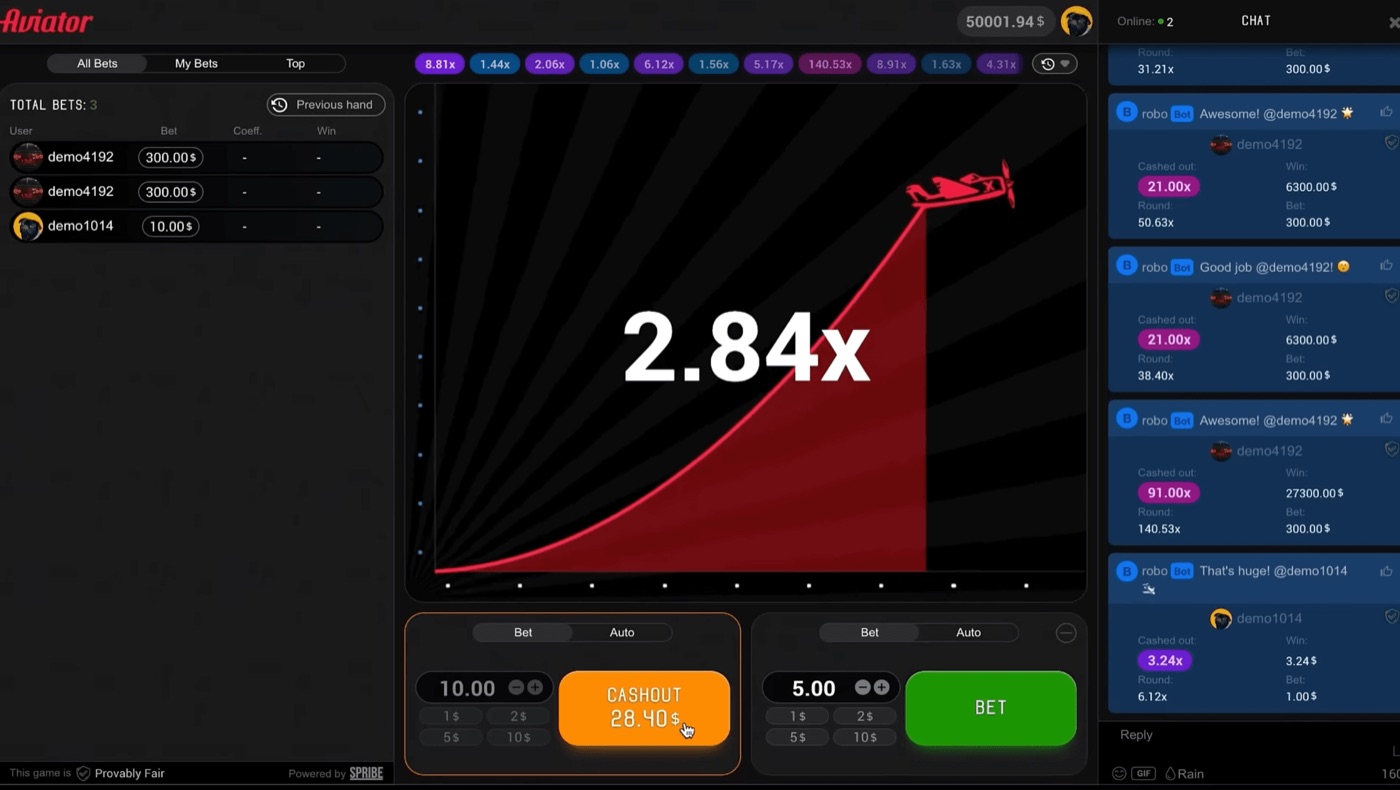
The live bets panel shows real exits such as a 28.40x cash-out, an outcome in the low single digits by probability.
Provably fair data you can verify
Before each round, the server publishes a SHA-256 hash of its server seed. Client seeds from players are combined with it, and the crash point is fixed before the plane takes off.
The verification process, step by step:
- Open the provably fair tool inside the game after the round ends.
- Take the revealed server seed and the client seeds from the round.
- Re-run the hash and confirm it matches the value published before the round.
- Recalculate the crash point from the combined seeds and compare it with the result shown.
Neither the operator nor Spribe can change a result after the round starts, because the hash was already public. This is the one part of Aviator where a player can verify fairness directly rather than trusting a claim. It is also why predictor apps fail: “Aviator Predictor” tools and Telegram signal bots resell public math, and the committed hash makes prediction impossible. Hollywoodbets itself tells players not to spend money on Aviator predictors.
There is no standalone official Aviator app from Spribe. The game runs inside a licensed operator’s website or app, and a demo mode exists with no registration for anyone who wants to observe the data before staking money.
Aviator FAQ
How many rounds make a useful sample?
At 60 to 90 rounds per hour, a single evening yields a few hundred rounds at most. Rare events like 100x multipliers (0.97% per round) need thousands of rounds before observed frequency meaningfully matches the table. Treat anything under a few hundred rounds as noise.
Does the round history predict the next crash?
No. Rounds are independent, and the crash point is committed by hash before take-off. A streak of low multipliers does not make a high one more likely, and “pattern” methods do not change the odds.
Why do roughly 1 in 33 rounds end at 1.00x?
The instant crash is built into the distribution at about 3% of rounds. It is part of how the 3% house edge is delivered, and it is the main reason very low auto cash-out targets still lose over time.
Why did my cash-out time out?
The cash-out request must reach the server before the crash. Latency or a slow device can delay the request past the crash point. Playing on a stable connection reduces this, but the risk never drops to zero.
Does cashing out early improve RTP?
No. Expected value is 97% of the stake at every cash-out target, from 1.2x to 100x. Early cash-outs reduce variance, not the house edge.
Can an app predict Aviator results?
No. Prediction is impossible because the crash point is fixed by hash before the round begins. Third-party “predictor” apps and paid signal channels have no access to unrevealed seeds, and version names like “v4.0” or “v12” are marketing labels, not products.