
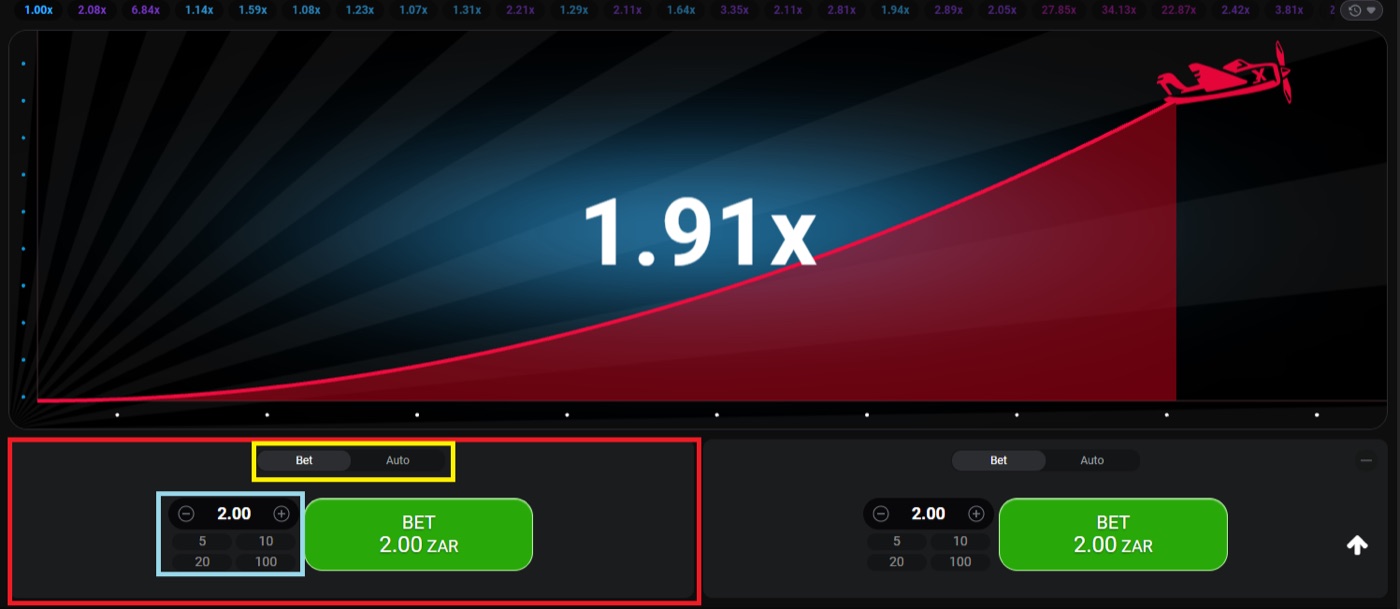
Aviator is a crash game by Spribe built around an increasing multiplier that can stop at any time. A 20-round demo drill lets you practise when to cash out, record what happened, and review decisions without staking money.
The exercise does not try to predict the next crash point. It gives each round a clear process, so you can separate the result of a round from the quality of your decision.
How Aviator Works
Spribe describes Aviator as a social multiplayer game with an increasing curve that can crash at any time. Each round usually lasts about 8 to 30 seconds, with a few seconds between rounds.
The multiplier rises from 1.00x until the crash point. A cash-out request must reach the server before the crash, so a slow device or connection can cause a cash-out time-out.
- Choose a stake amount or a virtual observation unit.
- Watch the multiplier rise after take-off.
- Cash out manually or use Auto Cash-Out at a preset multiplier.
- Record the crash point and your cash-out point after the round.
Aviator is not a slot and has no bonus round. Its central decision is the point at which you accept a return instead of waiting for a higher multiplier.
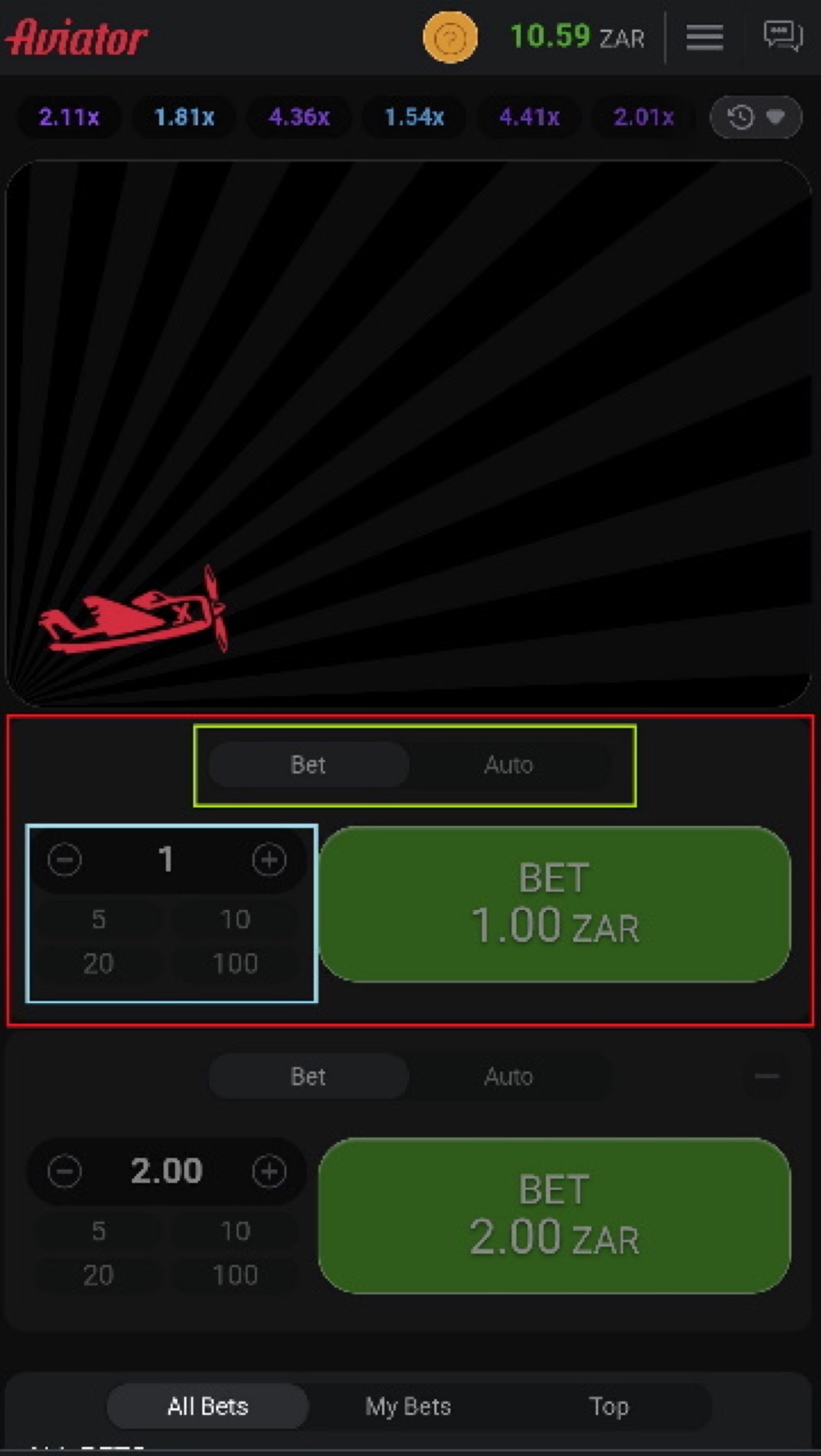
The mobile interface presents the multiplier and cash-out controls for a short round.
Set Up Twenty Rounds
A 20-round drill gives you a fixed sample for practising one cash-out rule. Aviator provides two bet panels per round, and each panel can use a separate cash-out.
Use demo mode through an operator demo or demo.spribe.io, which needs no registration. The demo works in desktop, tablet, and mobile browsers and is designed for low bandwidth and budget devices.
For this exercise, use virtual units rather than money. If the interface requires a stake field, enter the smallest available demo value or use the display only as an observation exercise.
- Open the demo and wait for the round history to appear.
- Choose one target, such as 1.5x, before round one starts.
- Use the same target for all 20 rounds.
- Write down the round number, crash point, target, and result.
- Do not change the target after a loss or raise it after a win.
The purpose is consistency, not a simulated profit target. A fixed target makes it easier to see whether you followed the rule, even when the result is negative.
You can use the first bet panel for the fixed target and leave the second panel unused. This avoids mixing a two-bet approach with the basic drill.
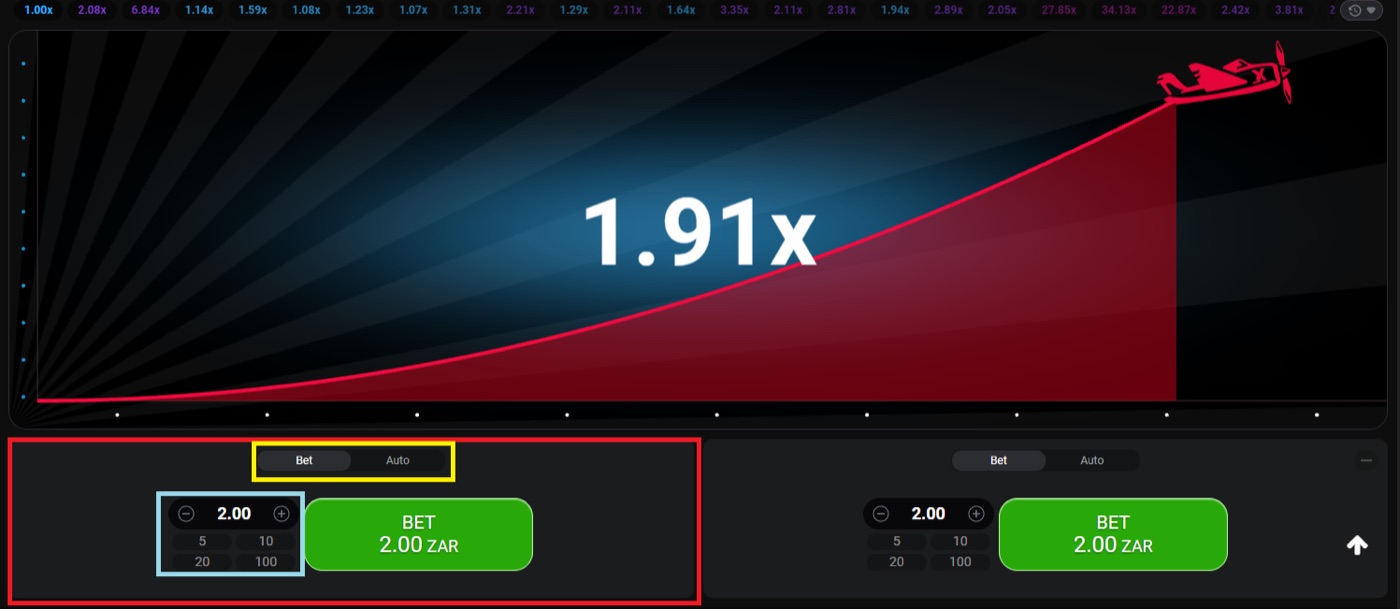
The desktop round shows two bet panels while the multiplier stands at 1.91x.
Record Every Outcome
Aviator displays previous multipliers in the round history at the top of the interface. About 3% of rounds crash instantly at 1.00x, which is roughly 1 round in 33.
A written log turns a fast visual sequence into information you can review. It also stops one memorable high multiplier from replacing the complete 20-round record.
| Round | Target | Cash-out | Crash point | Rule followed? |
|---|---|---|---|---|
| 1 | 1.5x | 1.5x | 2.14x | Yes |
| 2 | 1.5x | No cash-out | 1.22x | No |
| 3 | 1.5x | 1.5x | 1.48x | Yes |
The three rows above are a recording example, not a forecast of future rounds. In round two, the target was not reached, so the observation records a failed target rather than a successful cash-out.
- Round number: use numbers 1 through 20.
- Target: write the preset multiplier before the round.
- Cash-out: record the actual multiplier if the target is reached.
- Crash point: copy the final multiplier from the history.
- Rule followed: mark whether you acted as planned.
Record the exact cash-out shown by the interface. If the request times out, mark the event separately from a deliberate failure to cash out, because the two events describe different problems.
Do not use the previous rows to change the next target. Rounds are independent, so earlier multipliers do not create a reliable signal for the next crash.
Practise Cash-Out Discipline
The probability that a round reaches 1.5x is 64.7%, while the probability that it reaches 2x is 48.5%. The probability falls to 19.4% at 5x and 9.7% at 10x.
These figures explain the pressure in the drill. A lower target is reached more often, while a higher target produces fewer successful target attempts and more exposure to an earlier crash.
Choose one of these fixed exercises:
- Conservative exercise: set Auto Cash-Out at 1.5x for all 20 rounds.
- Higher-target exercise: set Auto Cash-Out at 2x for all 20 rounds.
- Manual exercise: cash out at the selected target without changing it after take-off.
Auto Cash-Out removes one timing decision, but it does not alter the round’s underlying edge. Manual cash-out adds a timing task that can expose hesitation, especially when the multiplier rises quickly.
If you compare a crash game, multiplier, or cash-out method before the drill, you may read play aviator apk as a gambling search phrase, not as evidence that a stake can be predicted or protected.
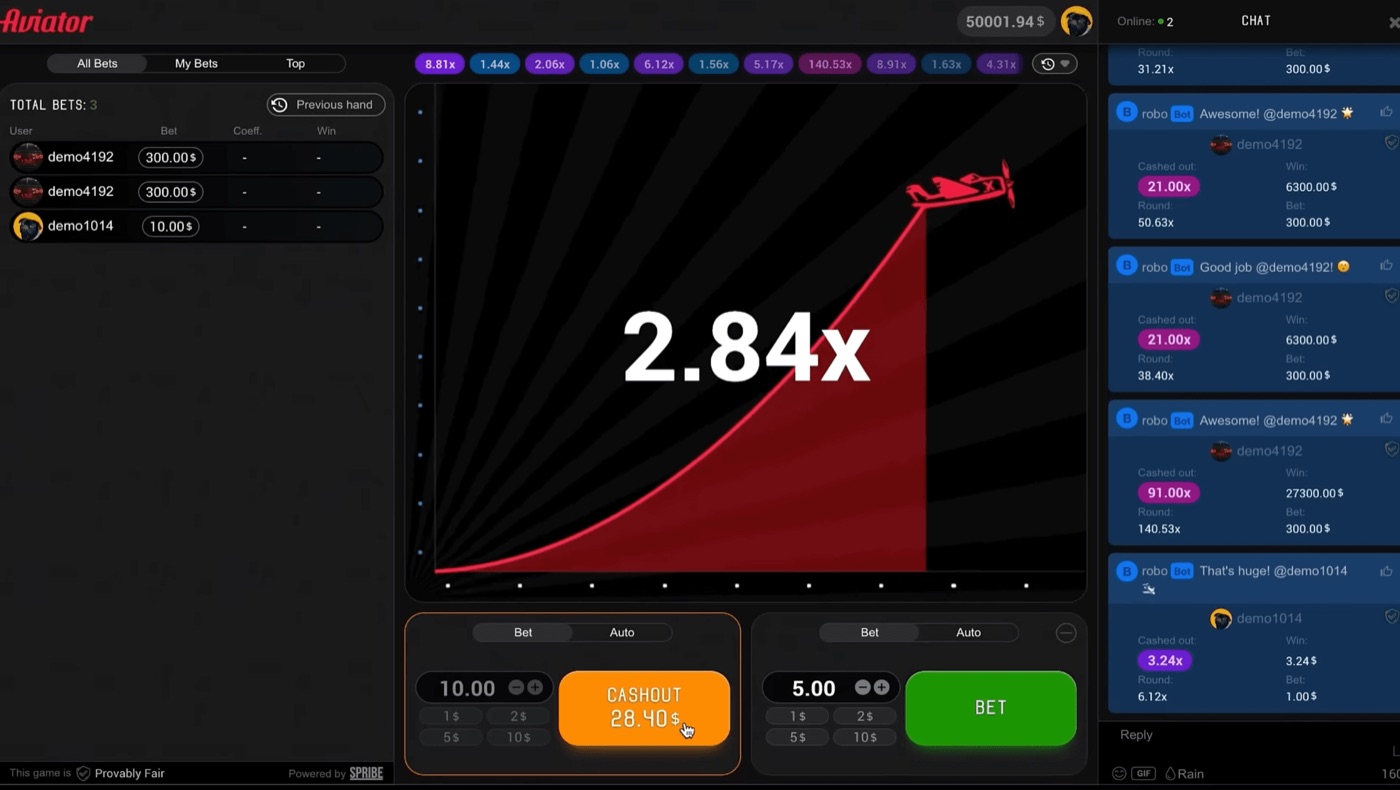
The full interface can show live bets, chat, and a cash-out displayed at 28.40x.
For each round, ask one question after the result: did I follow the selected rule? Do not ask whether the multiplier should have gone higher, because that question changes a completed record into hindsight.
Calculate The Drill
Aviator has a stated RTP of 97% and a house edge of 3%. The expected value is minus 3% of the stake at every cash-out target, so changing the target changes variance rather than the edge.
The 20-round exercise therefore measures behaviour, not a way to create a positive expectation. A short sample can contain more or fewer target reaches than the listed probability suggests.
After round 20, calculate these simple measures:
- Count how many rounds reached the selected target.
- Divide that count by 20 to find the observed hit rate.
- Count how many times you changed the rule.
- Count manual cash-out time-outs separately.
- Compare the observed hit rate with the listed probability for the target.
For example, if a 1.5x target is reached in 13 of 20 rounds, the observed rate is 65%. That is close to the stated 64.7% probability, but it does not prove that the next 20 rounds will produce the same result.
If a 2x target is reached in 10 of 20 rounds, the observed rate is 50%. That is also close to the stated 48.5% probability, but the difference is normal in a small sample.
- Target reaches show how often the chosen threshold appeared.
- Rule changes show whether discipline held under pressure.
- Time-outs show a possible connection or device issue.
- Crash points show what happened, not what will happen next.
A high multiplier in the history does not compensate for earlier failed targets. Likewise, several low crashes do not make a high multiplier due.
Use a loss limit and a win limit if you move from demo practice to gambling. Stop when either limit is reached, and do not chase a failed cash-out.
Check Fairness And Controls
Aviator publishes a SHA-256 hash of the server seed before each round. The crash point is fixed before take-off, and player client seeds are combined with the server seed.
After the round, the inputs are revealed and can be checked with the verification tool inside the game. Neither Spribe nor the operator can change the result after the round starts.
Use the demo drill to inspect the controls without treating them as prediction tools:
- Check the Provably Fair badge in the interface.
- Open the verification tool after a completed round.
- Compare the revealed inputs with the recorded crash point.
- Review the round history without searching for a pattern.
- Keep Auto Bet and Auto Play off unless you are testing their controls.
Auto Bet and Auto Play can run from 10 to 100 rounds and can include stop-on-win or stop-on-loss settings. Those settings automate instructions; they do not change the 3% house edge or make the crash point predictable.
Prediction apps, signal bots, graph analysis, and strategy chart files cannot know the crash point before the committed result is revealed. A responsible approach is to practise with no money and stop if gambling stops feeling controlled.
Maximum multipliers are not published by Spribe, and win caps per round depend on the operator. Do not use a demo result to assume that a real-money interface has the same stake range or payout cap.
Aviator FAQ
Aviator uses an increasing multiplier and a crash point fixed before take-off. Demo mode lets players practise the interface without registration.
The questions below address the specific decisions in a 20-round drill. They do not turn the drill into a prediction method.
Can I play Aviator for free?
Yes. Aviator has a demo mode available through an operator demo or demo.spribe.io, and the demo needs no registration. Use virtual observation units for the 20-round exercise and record the displayed outcomes.
Can an app predict Aviator?
No prediction app can determine the crash point in advance. The server publishes a SHA-256 hash before the round, and the result is fixed before take-off.
What target should the drill use?
Use one target for all 20 rounds so that the exercise measures discipline. The listed probabilities are 64.7% at 1.5x and 48.5% at 2x, while the expected value remains minus 3% of the stake at every target.
Why did my cash-out time out?
A cash-out request must reach the server before the crash. Latency or a slow device can cause a time-out, so record it separately from a decision to wait.
Does a previous crash change the next round?
No. Aviator rounds are independent, so a sequence of low or high multipliers does not change the odds of the next round. The drill should keep its target unchanged.
Can I use two bets in the drill?
Yes, but a two-bet exercise is different from the single-target drill. Aviator has two bet panels with separate cash-outs, so record each panel independently if you test that arrangement.